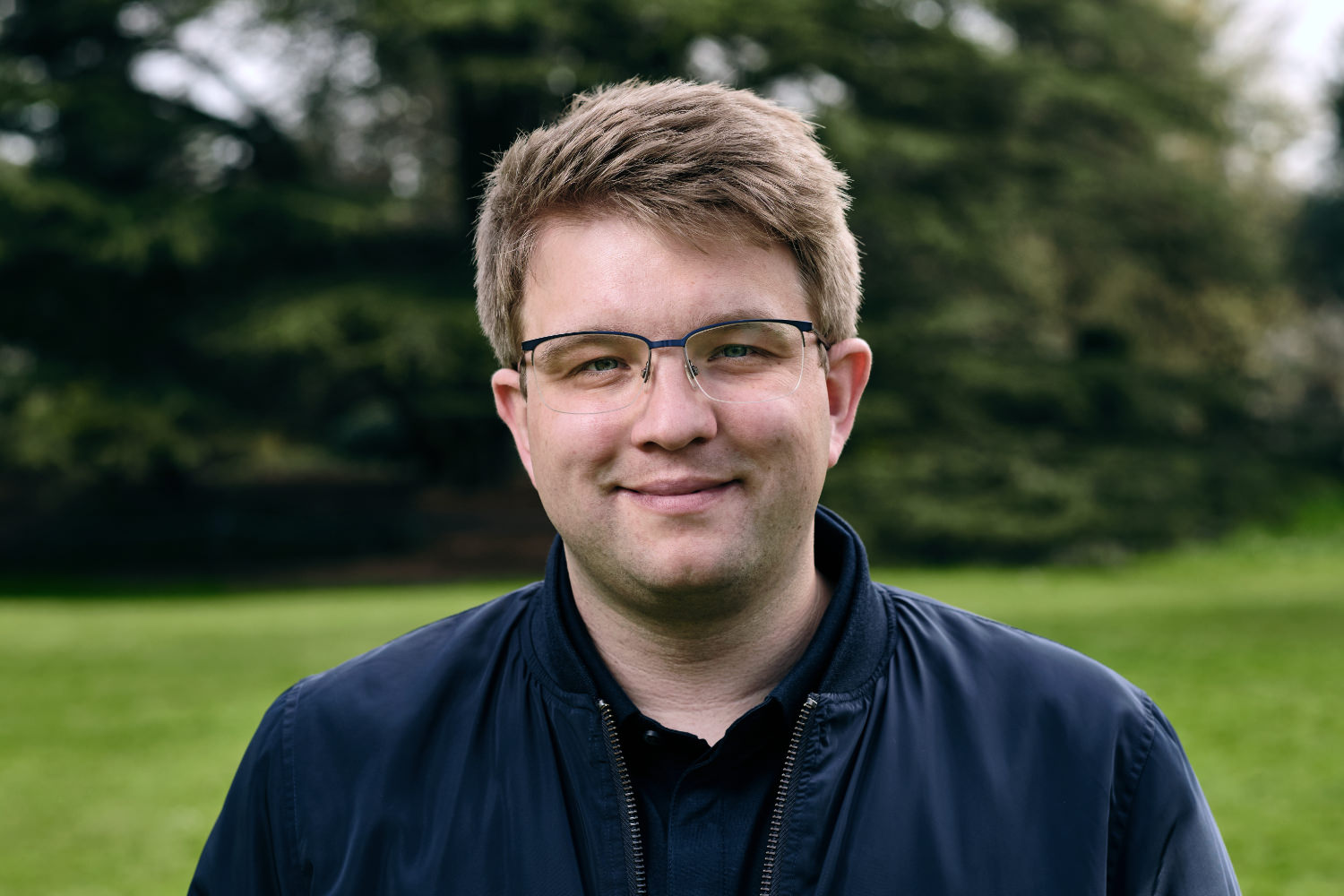
About me
PhD-qualified senior engineer with 10+ years of experience delivering novel, production-grade solutions at the intersection of AI, signal processing, physics-based modelling and full-stack software – from early-stage R&D through to scalable, client-facing deployment. Currently orchestrating an AI-native delivery model in which autonomous agents raise, test and review production code.
Experience
- Orchestrating an AI-native software delivery model for SmartAssessor, a compliance evidence platform serving regulated, audit-driven environments: autonomous agents raise pull requests, automated QA agents verify them, and a spec-driven TREE workflow governs the lifecycle – with Claude Code as the primary development orchestration layer.
- Conducted a technical fitness analysis of the Universal Standards Schema against six regulatory frameworks (ISO 9001, ISO/IEC 27001, PCI DSS v4.0.1, CMMC, Cyber Essentials, CREST); delivered schema change recommendations, OSCAL taxonomy positioning, and a three-phase roadmap toward a universal standards ingestion capability.
- Defined the QA environment strategy for agent-raised PRs, establishing where automated verification should sit across dev/CI and staging; evaluated browser-automation tooling for autonomous QA agents and set the direction toward Playwright-based harnesses.
- Assessed structural risk in a 2.8M-line specification corpus within a spec-driven codebase; recommended an epic-archiving strategy over a repository split, preserving spec–code atomicity in agent-raised PRs.
- Hands-on across the platform’s bespoke RAG/retrieval layer (hybrid vector + BM25 search, Azure Document Intelligence ingestion, PostgreSQL with Apache AGE graph extensions) and its Python/FastAPI + TypeScript/React/Next.js stack.
- Pioneered adoption of AI-assisted development across the engineering team: rolled out Claude Code to engineers' local environments, integrated automated AI code review into the CI/CD pipeline, and built custom agentic workflows – delivering an estimated 5× increase in individual engineer output.
- Co-architected ePOP Pro, a 1M+ line compiled MATLAB desktop application deployed as a standalone executable to 10 enterprise clients; responsible for overall system design, module architecture, and code quality across a team of 6.
- Led development of core subsystems (Transmission Generator, Motor Generator) within a multi-domain physics engine covering mechanical, thermal, and electrical modelling – delivered to production and actively used by paying clients.
- Contributed to an in-house Simulink-to-MATLAB transpiler, enabling standalone deployment of simulation models without a Simulink runtime dependency.
- Formalised plugin architecture across a 1M+ line organically grown codebase: introduced clear module boundaries, dependency contracts, and a plugin registry – significantly reducing coupling and onboarding time for new engineers.
- Introduced CI/CD from scratch: GitLab CI / GitHub Actions pipelines, automated unit testing frameworks, and structured code review processes across the team.
- Led backend API development for ePOP Concept, a 500k line web-based simulation platform (Angular / TypeScript); designed and built a REST API integrating AWS DynamoDB with the front-end simulation environment, enabling real-time architecture composition from a live component database.
- Designed combinatorial search algorithms evaluating up to 500,000 architecture permutations against multi-criteria customer requirements.
- Defined and owned the software engineering strategy for a team of 4–7 engineers: introduced Git branching workflows, coding standards, code review culture, CI/CD pipelines, and a structured mentoring programme – taking the team from ad hoc scripting to production-quality engineering practice.
- Rearchitected a large inherited MATLAB/Python analysis codebase for vehicle dynamics tooling, rebuilding for testability, modularity, and long-term maintainability.
- Delivered LHAS (Limited Handling and Stability), a production analysis tool used daily by 20 in-house vehicle dynamics engineers to process and analyse data from proving ground tests – translating raw test data into actionable engineering insight across the handling and stability discipline.
- Contributed to ATOM (Application Toolbox for Objective Metrics), a vehicle build tracking platform with a SQL database backend and MATLAB UI frontend, used by 500 engineers across JLR – serving as version control for vehicle configurations across the full development programme.
- Partnered with domain engineers to translate complex analytical requirements into well-specified, maintainable software; drove adoption of Agile/Scrum across the team.
- Tech Lead for a cross-functional team of 11 engineers spanning chassis, body, and powertrain disciplines – coordinating delivery across workstreams while maintaining hands-on technical contribution.
- Built and led delivery of: Simulink-based analysis tools, desktop MATLAB applications, interactive web dashboards, and automated reporting pipelines – all shipped to internal stakeholders.
- Designed and managed data pipelines from a 350-vehicle engineering fleet into GCP / BigQuery; reduced manual data processing across the organisation.
- Developed production MATLAB CAE applications within an Agile team; applied ML and numerical optimisation to automate vehicle tuning workflows previously done manually.
- Designed and delivered FRM (Fast Ride Model), a reduced-order vertical dynamics simulation tool combining a Simulink 18-DOF vehicle model backend with a MATLAB UI frontend, adopted by 20 engineers across the vehicle dynamics simulation department. FRM reduced full simulation sweep time from 90 minutes to 90 seconds (a 60× speed-up) while maintaining accuracy within 90% of the original.
- Designed fleet data pipeline architecture that became the foundation for the Data Science team.
- Objective and subjective vehicle testing on public roads and proving ground; findings presented to senior engineering leadership.
- Investigated image sensor degradation under real-world noise conditions for ADAS applications; trained DNN classifiers using MATLAB Automated Driving Toolbox.
- Built signal processing pipelines and trained ANNs (MATLAB and Python) to predict human ride comfort from biometric and vibration data – published in peer-reviewed journals and presented internationally.
- Hands-on vehicle test programme design and execution in a professional automotive test environment.
Skills & Tools
Education
Coventry University
ANN-based predictive modelling of ride comfort from biometric and vibration data. Co-funded by HORIBA MIRA. Published in Neural Computing and Applications, Springer (2019).
Read the paper →Wroclaw University of Science & Technology
Wroclaw University of Science & Technology
Languages
English – Fluent (Cambridge ESOL)
German – Working proficiency (Goethe Institut)
Polish – Native